
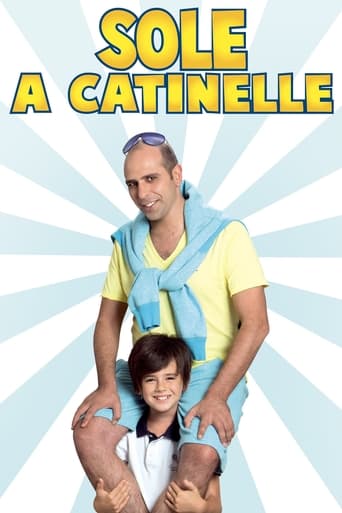
Sun in Buckets (2013)
COMEDY – 90′ – IT
The story of a father and a son. An on the road trip from South to North.
★★★★★ + info »

Italian comedies and classics, with the official services that carry them.
187 Italian films, 1947 to 2024, chosen for the whole household.
COMEDY – 90′ – IT
The story of a father and a son. An on the road trip from South to North.
★★★★★ + info »
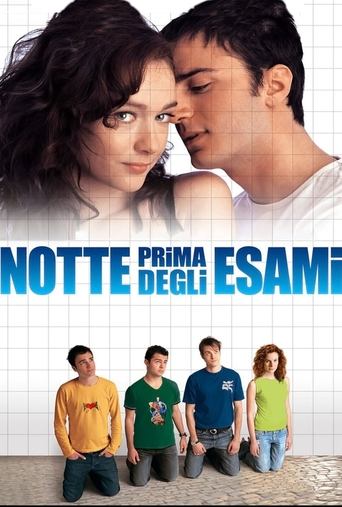
COMEDY / DRAMA – 100′ – IT
Rome, 1989. On his last day of high school, Luca gets in trouble when he takes it all out on hated literature teacher Martinelli, only to discover he's going to be heading the examination board for his finals. During a summer of fruitless study, he falls in love with a girl he met once at a party, unaware that she's Martinelli's…
★★★★★ + info »
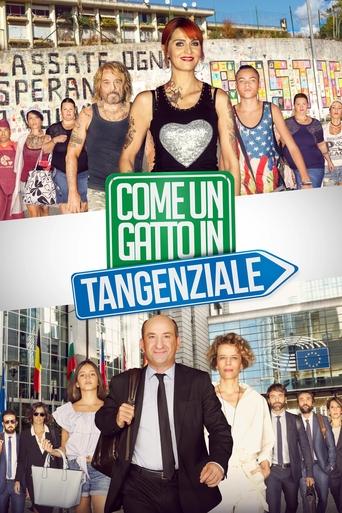
FAMILY / COMEDY – 99′ – IT
The story of an encounter between a bourgeois man and a poor woman, because their teenage children fall in love.
★★★★★ + info »
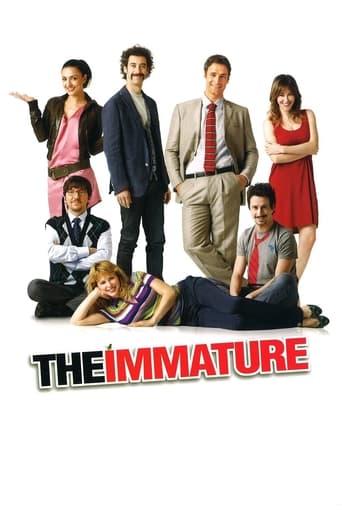
COMEDY – 108′ – IT
Six high school friends in their 40s who haven't seen each other in nearly 20 years rekindle their younger selves after a court cancels their diploma, forcing them to repeat the final high school exam.
★★★★★ + info »
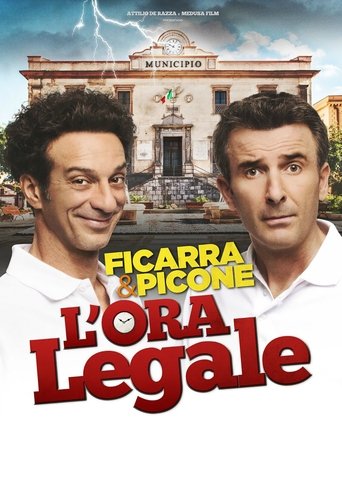
COMEDY – 88′ – IT
A small Sicilian town elects a new, honest major but quickly learns that playing by the rules is not as easy as it seems.
★★★★★ + info »
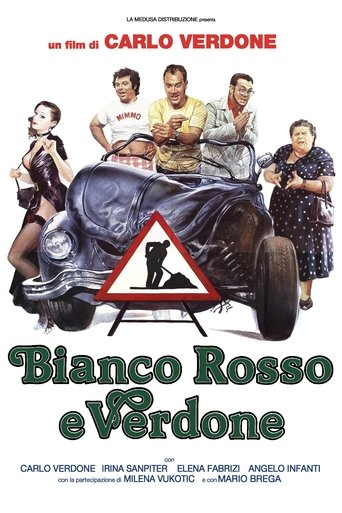
COMEDY – 110′ – IT
Three very different Italians travel to their hometowns on election day: Pasquale, a Southern immigrant living in Munich, finds a country far removed from the one he left behind; Roman civil servant Furio's relentless nitpicking threatens to push his wife Magda over the edge; young Mimmo's journey is repeatedly interrupted by…
★★★★★ + info »
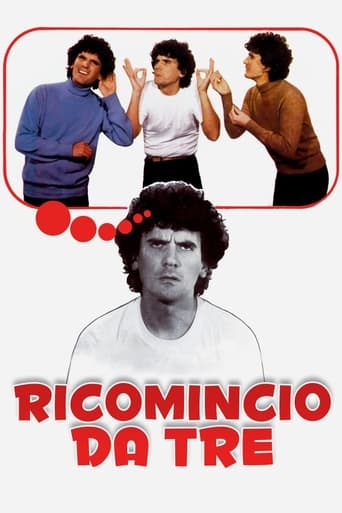
COMEDY – 107′ – IT
Gaetano, a young Neapolitan, decides to leave home, work and friends, to look for other moments of life and meet other people.
★★★★★ + info »
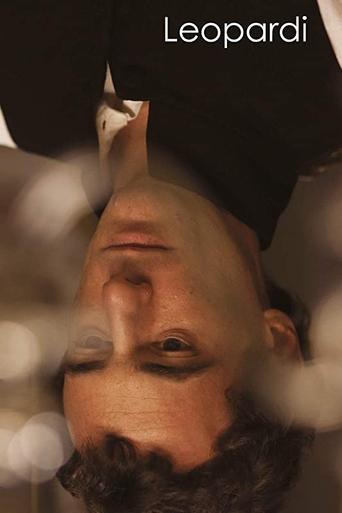
DRAMA / HISTORY – 137′ – IT
In 19th-century Italy, Giacomo Leopardi channels his debilitating illness and isolation into poetry.
★★★★★ + info »
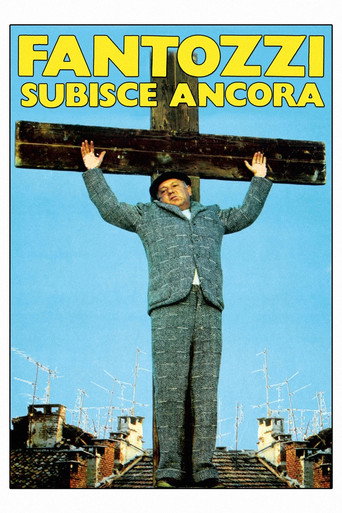
COMEDY – 85′ – IT
After a hard day at work and a condominium-board meeting, accountant Ugo Fantozzi goes on a trip with his family. Unfortunately, he will face a nasty surprise upon his return.
★★★★★ + info »
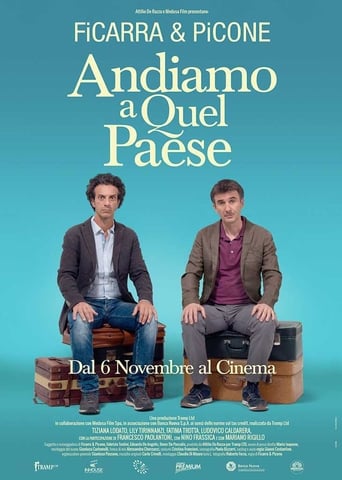
COMEDY – 95′ – IT
Valentino and Salvo, unemployed and in search of fortune and recommendation, leave Palermo for Valentino’s home town, Monteforte, where they will try to survive the Italian crisis by opening some sort of hospice.
★★★★★ + info »
Italy has given the world two kinds of cinema. One is the cinema of the festivals, the great directors and the prizes. The other is the cinema Italians themselves go to see: the comedies, hundreds upon hundreds of them, in which a Neapolitan nobleman of the stage named Totò talks his way past every official in the country, a Roman named Alberto Sordi plays every weakness of the national character and makes it lovable, and each new generation finds a comedian of its own. CB01 is a guide to that second cinema and to the gentler classics around it: 187 Italian films made between 1947 and 2024. Each has its own page, its story, its director and cast, and a Watch now button that leads to the official services carrying it in your country.
The catalogue has been chosen for the whole household. Every film was read through by hand, and the selection favours comedy above all, with family stories, romances and humane dramas beside it. Crime films, horror, films of the battlefield and comedy made strictly for adults were left out. What remains is the Italy of the kitchen table and the piazza: two penniless families invited to impersonate aristocrats for an afternoon, a traffic policeman who dares to fine the mayor, a shy young man from Naples who sets out for Florence and insists that he is starting over from three, since three things in his life have gone well.
The numbers give a first idea of the shape. One hundred and sixty-nine of the films are comedies, sixty-two are dramas or comedies with a serious heart, and fifty-five are love stories. Seventy-six belong to the golden age before 1970, fifty-two of them to the forties and fifties. Twenty-seven star Totò and twenty-three star or were directed by Alberto Sordi. Twenty-six are set in Rome and twenty-six in the South, nineteen in schools, and thirty have appeared since 2010. Fifty-two carry a score of 7 or higher from the viewers of TMDB.
A first-time visitor can begin with any of six films. Poverty and Nobility is Totò at his most famous, with a young Sophia Loren. The Hawks and the Sparrows sends him down a country road with a talking crow, for Pasolini. I'm Starting from Three is the first film of Massimo Troisi, and Bianco, rosso e Verdone the second of Carlo Verdone, who plays all three of its heroes. Bread and Chocolate follows an Italian waiter in Switzerland, and The Traffic Policeman is Sordi in the role that defined him.
CB01 is a white page with red titles. The logo, a red film frame, stands at the upper left; beneath it a dark menu bar in condensed capitals offers Home, Films, Comedy, Totò, Alberto Sordi, Golden age, A-Z and My List. A black band shows six posters, and a second dark band holds the search field with links to all the lists and to the help pages. The home page then sets out its films as a column of entries: a poster at the left and, beside it, the title and year in red, a bold line giving the genre, the length and the country, a few sentences of story, a row of yellow stars and a link for more. A side column of pale boxes lists the films of Totò, the films of Sordi and the newest titles.
The lists are the main way through the catalogue. Comedy, Drama, Romance and Family sort the films by kind. Totò and Alberto Sordi gather the work of the two great comedians. School, The South and Rome sort by subject and place, Golden age holds everything made before 1970, six lists divide the catalogue by period, and Top rated has the fifty-two with the strongest scores.
The page for a film is arranged like a card in a film library. At the head are the poster, the English title and the title under which the film opened in Italy; next come the year, the running time and the score from TMDB. A short account of the plot follows, with the director and the leading actors named after it. Below, a menu lets you set your country, which CB01 will remember, and the Watch now button sends you to JustWatch, where every service with the film in that country is listed.
Antonio de Curtis, known to everyone as Totò, made ninety-seven films, and twenty-seven of them are here. He was born in a poor quarter of Naples in 1898, learned his trade in the variety theatres, and brought to the screen a body that seemed to have twice the usual number of joints, a long sorrowful face with a jaw that slid sideways, and a way with words that turned every pompous phrase inside out. His character is nearly always the same: a poor man of great dignity and greater appetite, who meets authority in the shape of a clerk, a policeman or a duchess and reduces it to confusion.
Poverty and Nobility, from the old Neapolitan comedy by Eduardo Scarpetta, is the film Italians know best. Two families share a bare flat and their hunger, until a young marquis offers them a fine meal if they will pose as his noble relations for a day. The scene in which a dish of spaghetti arrives and Totò fills his pockets with it is among the most famous in Italian cinema. Neapolitan Turk and Il medico dei pazzi come from the same author and the same director, Mario Mattoli, who made nine of the films in this catalogue.
The partnership with Peppino De Filippo produced some of the best. In The Band of Honest Men a caretaker, a printer and a painter come into possession of the plates for printing banknotes and are far too honest to enjoy the result. Totò, Peppino e i fuorilegge, Totò, Peppino e le fanatiche and Totò, Peppino and... the Sweet Life, a send-up of a famous film of the day shot on the same sets, set the two against each other as rivals, brothers-in-law and cousins. Gentlemen Are Born makes Totò a baron who has spent everything, and The Overtaxed pairs him with Aldo Fabrizi as a shopkeeper and the tax inspector he hopes to befriend.
Many of the films are little more than a string of sketches, and all the better for it. Toto the Sheik is a desert spoof, Figaro qua... Figaro là an opera spoof, Toto the Third Man gives him three brothers to play, and The Emperor of Capri mistakes a waiter for a prince. Totò Looking for Wife, Toto and the Women and Totò Seeks Peace are domestic farces; Seven Hours of Troubles concerns a tailor, a christening and a missing baby. Totòtruffa '62 contains the celebrated scene in which he sells a Roman fountain to a tourist, and Totò Story is an anthology of the best moments.
Now and then a director asked more of him. In Toto and Carolina, by Mario Monicelli, he is a policeman ordered to escort a young runaway back to her village, and the comedy has real tenderness. In Destinazione Piovarolo he is a stationmaster posted to the smallest station in Italy, where he waits thirty years for a transfer. Toto and Marcellino pairs him with a small orphan. And at the end of his life Pier Paolo Pasolini cast him in The Hawks and the Sparrows, where a father and son walking the roads outside Rome are joined by a crow who talks philosophy, and in the short What Are the Clouds?, where he plays a puppet who discovers the sky. Totò, who had been dismissed by critics for thirty years, was honoured at Cannes for the first.
If Totò was the Italian as he would like to be, quick and free, Alberto Sordi was the Italian as he feared he was. Over a career of sixty years he played a gallery of ordinary men, boastful, timid, cunning, fond of their mothers and anxious to please their superiors, and he played them so truthfully that the whole country recognised itself and laughed. Twenty-three of his films are here, five of which he directed.
The Traffic Policeman is the essential one. Otello Celletti, unemployed for years, finally obtains a post in the municipal police, a motorcycle and a uniform, and enjoys them enormously until the day he gives a ticket to the mayor. Luigi Zampa directs, and the film says everything about small power and large. In The Art of Getting Along, also by Zampa, Sordi plays a Sicilian who changes his politics with every change of government across forty years. The Widower, by Dino Risi, casts him as a Roman businessman, full of schemes that fail, married to a Milanese wife with money and a sharp tongue, played by the incomparable Franca Valeri.
The fifties films show him inventing his type: the Roman layabout of The Bachelor, the teacher of Bravissimo who discovers that a small pupil has the voice of an opera bass, the swindler of Piccola posta, the public censor of The Moralist and the lawyer left alone for one evening in Good night… lawyer!. In The Teacher from Vigevano he gives one of his finest dramatic performances as a primary schoolmaster whose wife wants more from life than his salary allows.
The Scopone Game, by Luigi Comencini, is a small masterpiece. Each year an elderly American millionairess, played by Bette Davis, comes to Rome and invites a poor couple from the shanties, Sordi and Silvana Mangano, to play cards with her for high stakes, lending them the money to lose. Il presidente del Borgorosso Football Club makes him the reluctant heir to a provincial team. As a director he was affectionate and unhurried: Smoke Over London follows an antique dealer from Perugia in love with all things English, Journey with Papa pairs him with Carlo Verdone as father and son, I Know That You Know That I Know with Monica Vitti as husband and wife, and Il tassinaro and Nestore, l'ultima corsa are portraits of a Roman cab driver and a coachman at the end of their working lives.
The seventy-six films made before 1970 show Italian cinema in its most fertile years. The earliest belong to the neorealist movement, which took its cameras into the streets after 1945 and found its stories among working people. La Terra Trema, Luchino Visconti's film of 1948, was made in a Sicilian fishing village with the fishermen themselves, speaking their own dialect; it follows one family's attempt to free itself from the wholesalers who buy the catch. The Path of Hope, by Pietro Germi, travels with a group of Sicilian miners and their families the whole length of Italy in search of work, and Rome 11:00 reconstructs a morning on which two hundred young women answered a single advertisement for a typist.
Very soon the same streets were filled with comedy. Angelina gave Anna Magnani a great popular role as a housewife in a Roman suburb who leads her neighbours to demand decent homes and finds herself a public figure. Under the Sun of Rome follows a group of boys growing up around San Giovanni, and Two Cents Worth of Hope, which shared the top prize at Cannes in 1952, tells of a young man back from military service who takes on every job in his village to earn the right to marry. Critics called the style pink neorealism: the settings were as poor as before, and the stories ended well.
The Roof, by Vittorio De Sica, turns on a point of law. A structure with a roof on it was safe from demolition, so a newly married couple with nowhere to live must build a one-room house on waste ground in a single night, before the police come round at dawn. Days of Love has a young Marcello Mastroianni and Marina Vlady as a couple too poor to afford a wedding, who decide to elope and save their families the cost. The Overcoat moves Gogol's story to a wintry town in the north, with the comedian Renato Rascel as the clerk who saves for a new coat, and A Dog’s Life follows a troupe of variety performers on the road, with Aldo Fabrizi as the manager and a young Gina Lollobrigida as a girl who joins them.
Fabrizi, round and exasperated, was a star in his own right. He directed and led La famiglia Passaguai, about a family's catastrophic Sunday at the seaside, and plays the father of a small girl about to receive a new white dress in First Communion, a comedy of one frantic morning. The episode film was a favourite form of the period, a handful of short stories under one title: The Anatomy of Love, Of Life and Love, drawn from the tales of Pirandello, and We, the Women, in which Ingrid Bergman, Anna Magnani and others each tell a small story from their own lives.
By the late fifties a new and sunnier comedy had arrived. Poor But Beautiful, by Dino Risi, is about two young Romans, neighbours and best friends, who fall for the same girl; it was so successful that Poor Girl, Pretty Girl followed within the year. Oh! Sabella has a formidable Neapolitan grandmother, played by Tina Pica, ruling her family from her bed. Doctor and the Healer sets a young doctor from the north, played by Mastroianni, against a village healer played by De Sica, and Fathers and Sons, by Monicelli, weaves together five Roman households. Guendalina is a gentle story of a first love one summer at the seaside.
The economic miracle of the early sixties gave the comedy sharper teeth. The style that grew from it, comedy Italian style, looked at a country getting rich very fast and asked what it was losing. Dino Risi was its quickest eye. Love and Larceny gave Vittorio Gassman his breakthrough in comedy as an actor who turns his talents to confidence tricks. Il gaucho sends him to Argentina with a film delegation. The Thursday follows a separated father through the one day he is allowed with his eight-year-old son, and Weekend, Italian Style watches a businessman join his wife for a crowded holiday weekend on the Adriatic.
It's a Hard Life, with Ugo Tognazzi, sends a provincial intellectual to Milan with a plan and watches the city turn him into an advertising man. Il successo is about a clerk who wants a share of the boom at any cost, and The Man with the Balloons, by Marco Ferreri, has Mastroianni as a sweet manufacturer obsessed with how much air a balloon will hold. Omicron is a science fiction comedy in which a visitor from another planet takes a place on a factory line to study human beings.
The Last Judgment, written by Cesare Zavattini and directed by De Sica, has one of the great comic premises. One morning in Naples a mighty voice from the sky announces that the last judgment will begin at six o'clock that evening, and a whole city, played by half the stars of Europe, spends the day adjusting its behaviour. Roaring Years, from Gogol's play, has an insurance salesman mistaken for an inspector from Rome by the officials of a small southern town in 1937, and Lo smemorato di Collegno gives Totò the part of a man who has lost his memory and is claimed by several families at once.
The forty-four films of the seventies and eighties range widely. Bread and Chocolate, by Franco Brusati, is the great comedy of emigration. Nino Manfredi plays a waiter from the south working in Switzerland on a temporary permit, determined to stay and to be as Swiss as the Swiss. He loses the permit and tries one refuge after another, and the film moves from farce to something close to heartbreak and back, and ends on a railway platform with a choice. Manfredi appears again in Café Express, as a man who sells coffee from a flask on the night train between Naples and the south, one step ahead of the inspectors.
Federico Fellini is here in two late, relaxed films. The Clowns, made for television in 1970, is part memoir and part enquiry: he recalls the circus that came to his town when he was a boy and travels through Italy and France in search of the old clowns. Intervista, from 1987, has a Japanese television crew visiting him at the Cinecittà studios, which sets him remembering his own first visit there as a young journalist. Ettore Scola, the most humane of the directors who followed, has four films: Macaroni, in which Jack Lemmon plays an American executive who returns to Naples forty years after the war and is claimed by an old friend, played by Mastroianni; Splendor, about a small-town cinema and the three people who keep it open; What Time Is It?, a day shared by a father and his son on military service; and The Voyage of Captain Fracassa, a company of travelling players on the road to Paris.
The cheerful adventures of Bud Spencer and Terence Hill belong to these years too. Super Fuzz gives Hill, as a Florida policeman, an assortment of superpowers that vanish at the sight of the colour red, and Buddy Goes West makes Spencer a wandering stranger mistaken for a doctor in a frontier town. The Sicilian pair Franco Franchi and Ciccio Ingrassia, who made more than a hundred films together, run a driving school in Who Gave You the License? and go after buried treasure in Franco, Ciccio and the Pirate Blackbeard.
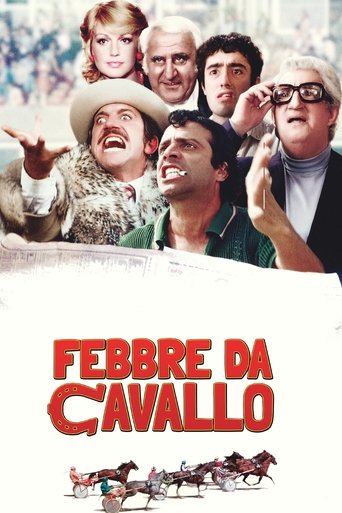
Paolo Villaggio's accountant Fantozzi, the most downtrodden employee in the history of the office, appears in Fantozzi Still Suffers and in Super Fantozzi, which follows his bad luck from the Garden of Eden to the space age. Horse Fever, by Steno, is the adored comedy of three Roman friends who would do anything for a winning tip at the races, with Gigi Proietti. Lino Banfi is the hapless coach of L'allenatore nel pallone and a hopeful pools player in At the Sports Bar. Renato Pozzetto leaves his farm for Milan in The Country Boy and swaps flats in My House My House..., and Taste of the Sea began a long line of comedies about the summer holidays of the sixties.
Around 1980 a generation of comedians who had begun in cabaret and on television started to write, direct and star in their own films. Massimo Troisi was the most loved. A Neapolitan who spoke in hesitations, half-finished sentences and a dialect he declined to soften, he made shyness funnier than any boasting. I'm Starting from Three, his first film, cost very little and ran in some cinemas for more than a year. Gaetano leaves Naples for Florence, tired of being asked whether he is an emigrant; he is only travelling, he explains. Sorry for the Delay and I Thought It Was Love continue the portrait of a man permanently puzzled by love, and in The Voyage of Captain Fracassa he plays Pulcinella.
Carlo Verdone is the Roman of the group, a gifted mimic who filled his early films with characters. In Bianco, rosso e Verdone three men drive home to vote on election day: a fussy family man from Turin, a wide-eyed boy travelling with his grandmother, and an emigrant returning from Germany who speaks to nobody for the entire journey and saves his one speech for the polling station. Too Much follows a would-be stuntman, Al lupo, al lupo three grown children searching for their father, and Maledetto il giorno che t'ho incontrato pairs him with Margherita Buy as two nervous souls who share a therapist.
Francesco Nuti, from Tuscany, is the billiards player of The Pool Hustlers and its sequel Casablanca, Casablanca, and a late-night radio host in Stregati. Maurizio Nichetti, a mime by training, co-directed To Want to Fly, in which a sound-effects man in a dubbing studio falls in love and begins, limb by limb, to turn into a cartoon. Nanni Moretti made I Am Self-Sufficient on amateur film stock in 1976 and found an audience overnight. Luciano De Crescenzo, an engineer turned philosopher, wrote and starred in Thus Spoke Bellavista, in which a retired professor explains Naples to his neighbours, and Renzo Arbore's FF.SS. cioè '...che mi hai portato a fare sopra a Posillipo se non mi vuoi più bene?' is a musical spoof with the longest title in the catalogue.
Pupi Avati, from Bologna, works in a gentler key. A School Trip recalls a walking tour made by a class and two teachers across the Apennines in the spring of 1914, remembered seventy years later by the last surviving pupil. Graduation Party follows a baker who is asked to organise a celebration for the daughter of a woman he has admired from afar since 1940. The Best Man is set at a country wedding on the last day of the nineteenth century, and Bix is his affectionate life of the jazz cornet player Bix Beiderbecke, filmed in the musician's own home town in Iowa.
The eighties had room for costume comedy and fairy tale as well. Bertoldo, Bertoldino, and Cacasenno, by Monicelli, takes Ugo Tognazzi to the court of a Lombard king as a peasant whose cunning outwits every courtier. The Miser gives Sordi the great role of Molière's Harpagon. Cinderella '80 moves the old story to modern Rome, with an Italian-American girl who sings and a prince who plays in a band, and its songs were hits across Europe. He's Worse than Me pairs the singer Adriano Celentano with Renato Pozzetto as two inseparable friends whose friendship is tested when one of them falls in love, and Amarsi un po'... is a romance between a young mechanic and a girl of noble family. Il Bi e il Ba introduced the Sicilian comedian Nino Frassica and his gift for magnificent nonsense.
Italian cinema has a soft spot for the classroom, and nineteen films are set in one. La scuola, by Daniele Luchetti, takes place on the last day of term in a run-down technical school on the edge of Rome, where the teachers meet to decide who will pass. Silvio Orlando plays the one teacher who still believes in his pupils, and the film is funny and rueful in equal measure. He returns as a disillusioned literature master in Auguri professore. The Night Before the Exams goes back to the summer of 1989, when a boy insults his most feared teacher on the last day of school, only to learn that the man will be examining him, and then falls for the teacher's daughter.
Caterina in the Big City, by Paolo Virzì, sees Rome through the eyes of a thirteen-year-old from a small town on the coast, who arrives at a school where the children of the left and the children of the right sit on opposite sides of the room and both want her as a friend. Mignon Has Left is a tender story of a Roman family and the Parisian cousin who comes to stay, told by the boy who loses his heart to her. A Boy from Calabria, by Luigi Comencini, is set in 1960, the year of the Rome Olympics, and follows a thirteen-year-old who runs barefoot through the hills against the wishes of his father.
The Graduates launched the Tuscan comedian Leonardo Pieraccioni with the story of four students in their thirties who share a flat in Florence and have yet to finish their degrees. Easy! gives a tired former teacher, who writes other people's memoirs for a living, a fifteen-year-old pupil who turns out to be his son. Banana is about a boy who plays football in the Brazilian manner and applies the same optimism to life, and The Immature sends six friends of forty back to sit their school-leaving examination a second time.
The comedy of the last thirty years keeps the old virtues. Paolo Virzì has four films here. Besides the Caterina film there is August Vacation, in which two families of opposite outlook rent neighbouring houses on a small island; My Name Is Tanino, about a Sicilian student who crosses the Atlantic to return a video camera to an American girl; and A Whole Life Ahead, in which a philosophy graduate with top marks takes the only job she can find, in a call centre. The Station, the first film of Sergio Rubini, takes place on a single night at a tiny railway halt in Puglia, where a methodical stationmaster and a young woman in an evening dress wait for the morning train.
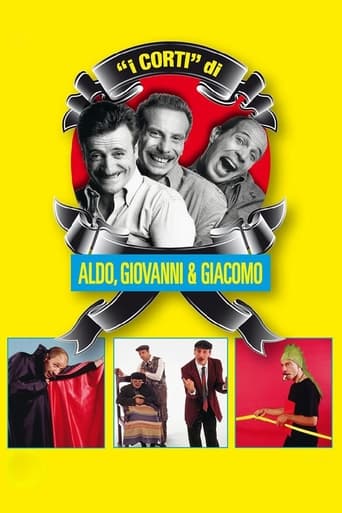
Antonio Albanese, one of the best comic actors of his generation, directed himself in Freshwater Man and La fame e la sete and gives a fine quiet performance in Intrepido: A Lonely Hero, as a man who makes his living by standing in for other people at their jobs for a day at a time. He stars with Paola Cortellesi in Like a Cat on a Highway, a comedy about a think-tank intellectual and a woman from the outskirts of Rome whose teenage children fall in love. The trio Aldo, Giovanni and Giacomo, who filled theatres through the nineties, can be seen in three recordings of their stage shows, beginning with “The Shorts” by Aldo, Giovanni and Giacomo.
The Sicilian pair Ficarra and Picone lead four comedies. Nati stanchi is about two friends whose ambition is to avoid finding work; Anche se è amore non si vede moves them to Turin as tour guides; Let's Go to the Country sends them back to a village where the pensions of the elderly are the only income; and It’s the Law is the sharpest of all, about a Sicilian town that elects an honest mayor and discovers how inconvenient honesty can be. Checco Zalone's Sun in Buckets, a road trip taken by a salesman and his small son, was the most successful Italian film of its year.
Journeys are a favourite subject. Basilicata Coast To Coast follows four amateur musicians who decide to walk across their region, from one sea to the other, to play at a festival. Citizens of the World, by Gianni Di Gregorio, is about three Roman pensioners who plan to move abroad, where their money will go further, and spend a happy film preparing. The Man Who Bought The Moon is a Sardinian fable, Tickets three stories on one train across Italy, and A/R Andata + Ritorno a romance between a courier and an air hostess stranded in Turin.
A few recent films are quieter. The Keys to the House, by Gianni Amelio, follows a young father who meets his fifteen-year-old son, who has a disability, for the first time, and travels with him to a clinic in Berlin. Shun Li and the Poet is about the friendship between a Chinese woman working in a bar on the Venetian lagoon and an old fisherman from the Balkans. The Wind Blows Round takes a French shepherd and his family to a half-empty village in the Occitan valleys of Piedmont. Il Buco recreates, almost wordlessly, the exploration of one of the deepest caves in Europe by a group of young cavers in 1961, and Leopardi is a life of the poet, with Elio Germano.
Italian comedy is always from somewhere. The voice, the gestures and the cooking tell an audience within a minute whether it is in Naples, Rome, Milan or Sicily, and much of the humour comes from the meeting of one with another. Twenty-six films here are set in the South. Saturday, Sunday and Monday, from the play by Eduardo De Filippo, gives Sophia Loren the role of a Neapolitan mother whose Sunday ragù, begun on Saturday, is the centre of a family quarrel that takes until Monday to mend. Ferdinand I King of Naples gathers the three De Filippos, Eduardo, Peppino and Titina, in a comedy about a Bourbon king who liked to walk among his subjects in disguise. Cerasella is a musical romance set on the bay.
Rome has twenty-six films of its own. The city of the fifties, half village and half capital, is in Under the Sun of Rome and Poor But Beautiful, with their boys diving into the Tiber. It Happened at the Police Station spends a day at a neighbourhood station where every Roman type passes the desk. The Rome of the boom is in The Thursday, and the tired, beautiful city of later years in Il tassinaro, whose taxi driver carries some very famous passengers, and in Roman Summer, the second film of Matteo Garrone.
The north appears as the place where the money is. The Country Boy, It's a Hard Life and The Teacher from Vigevano are all, in their way, about what the factories and offices of Lombardy did to people who came looking for a better life. After Midnight is set in Turin, inside the Mole Antonelliana, the great domed building that houses the National Museum of Cinema, where a night watchman lives among the exhibits and shelters a young woman who needs a place to hide. Unfair Competition returns to Rome in 1938, where two shopkeepers on the same street, rivals for years, find out what they mean to each other when new laws single one of them out.
A catalogue of Italian comedy is a family album, and the same faces return decade after decade. Marcello Mastroianni appears seven times, from the young builder of Days of Love to the three late films with Scola. Vittorio De Sica, who directed The Roof and The Last Judgment, is also here as an actor of great charm, the village healer of Doctor and the Healer and the worldly gentleman of half a dozen comedies. Vittorio Gassman, Nino Manfredi and Ugo Tognazzi, who with Sordi were called the four musketeers of Italian comedy, each have their films.
Among the women, Franca Valeri is the sharp-witted wife of The Widower and the countess of Piccola posta; Sophia Loren can be seen at twenty in Poverty and Nobility and at fifty-five in Saturday, Sunday and Monday; Anna Magnani leads Angelina; and Margherita Buy, the finest comic actress of recent decades, appears in four films, beginning with The Station. Silvio Orlando has five, Sergio Rubini four as actor or director, and Carlo Delle Piane, a child actor of the fifties, became the gentle hero of Pupi Avati's films thirty years later.
The directors deserve following too. Dino Risi has eight films here, Mario Mattoli nine, Luigi Zampa and Mario Monicelli six each, Steno five. They worked fast, often making three films in a year, and thought of themselves as craftsmen; time has shown how much art there was in the craft. Luigi Comencini, the director of The Emperor of Capri, The Scopone Game and A Boy from Calabria, was known as the film-maker who understood children best, and Alessandro Blasetti, who made First Communion and Me, Me, Me... and the Others, had been at work since the silent era.
Every film on CB01 was made in Italian, and most services offer it in the original language with English subtitles. Newcomers sometimes worry that verbal comedy will be lost, and with Totò a little of the wordplay does escape translation; but his films are also among the most physical ever made, and the meaning of a raised eyebrow is the same in every language. The Sordi comedies and the films of the eighties translate very well, since their humour lies in character and situation.
Dialect is a pleasure in itself. Totò and Troisi speak Neapolitan, Sordi and Verdone the lazy, ironic speech of Rome, Pozzetto the dialect of Lombardy, Franchi and Ingrassia and Ficarra and Picone the Sicilian of Palermo. Italians hear these differences as clearly as an English speaker hears an accent from Glasgow or Texas, and subtitles, while they flatten the sound, keep the sense. Learners of Italian will find the more recent comedies easiest to follow, and each film page gives the Italian title beside the English one, so that Il vigile finds The Traffic Policeman and Miseria e nobiltà finds Poverty and Nobility.
A good many films are listed under their Italian titles because they have yet to receive an English one. Their stories are described in English on their pages like all the others, and the Watch now button shows whether a subtitled edition is offered where you live.
The selection began with a survey of Italian films from 1945 to the present, a little over nine hundred titles, and was narrowed in three steps. First came the kinds of film that suit a family evening: comedy, romance, drama and adventure. Then came a reading of every story, one at a time, in which thrillers, films built on violence and the bawdier comedies of the seventies were set aside. Finally the posters and descriptions were checked.
The result is, by design, a catalogue of popular cinema. It has Fellini, Visconti, Pasolini and De Sica in it, and it sets them beside the directors who made three comedies a year for the Saturday-night audience, because in Italy the two were always close neighbours: the same actors, writers and cameramen moved from one to the other, and the comedies often said the sharper things. Some of the older films carry the attitudes of their time, and a household may wish to talk about them; all were chosen because their humour is warm.
CB01 keeps its films to itself among the guides of its family; each title was chosen for this catalogue alone. That is why some of the most celebrated Italian classics are absent, since they already have a home elsewhere. In exchange the catalogue goes deep into the work of Totò, Sordi and their companions, and a visitor who knows the famous titles will find here the films that Italians themselves watch again every year.
The comedies are short. A Totò film rarely passes ninety-five minutes, and several run under an hour and a half; the comedies of the eighties are much the same. The episode films divide naturally into two or three sittings. Among the longer entries are La Terra Trema, at two hours and forty minutes, and Franco Zeffirelli's film of Verdi's opera La traviata, with Teresa Stratas and Plácido Domingo, which is the one work in the catalogue that is sung throughout. Each film page shows the running time, so an evening can be planned.
The pace of the older comedies may surprise viewers who expect something slow. The talk is fast, the scenes are brief and the plots turn on a coin; these were films made for audiences who went to the cinema twice a week and knew every trick. The dramas of the neorealist years are slower and plainer, and reward a quiet room.
The search field in the dark band beneath the menu is the quickest way to a known film. It answers as you type and accepts English and Italian titles alike. The A-Z page sets all 187 films out in alphabetical order, the Films page shows them by popularity, and All lists, beside the search field, opens every list in the catalogue.
My List is CB01's shelf for the films you have set your heart on. The Add to My List button on a film page puts the film on the shelf, and My List in the menu takes it down again for you to see. Everything stays in your browser on the machine you are using, ready for the next visit, until you remove it; for a second machine, the list page will write the shelf to a file and read it back.
The help pages cover each part of the catalogue in a few lines: How to watch, Totò, Alberto Sordi, Golden age, Comedy, Drama, Romance, Family, School, The South, Rome, Directors and Watching in Italian, with Finding titles and My List for the tools.
A newcomer who would like a plan can take four weekends. On the first, meet the two masters: Poverty and Nobility on Saturday and The Traffic Policeman on Sunday. On the second, stay in the golden age with Two Cents Worth of Hope, Poor But Beautiful and The Last Judgment. On the third, move to the eighties: I'm Starting from Three, Bianco, rosso e Verdone and, for the younger members of the household, Super Fuzz.
On the fourth weekend, come up to date with La scuola, It’s the Law and Like a Cat on a Highway, and close with Bread and Chocolate, which belongs to every period. After that the Totò and Sordi lists hold fifty films between them, and Italian comedy, once begun, is a taste that lasts.
CB01 is a guide to 187 Italian films chosen for the whole household, each with its story, cast and a Watch now button to the official services that carry it.
Start with Poverty and Nobility, The Traffic Policeman or I'm Starting from Three. They introduce Totò, Alberto Sordi and Massimo Troisi.
Yes. Every film was read through by hand, and thrillers, horror, battlefield stories and comedy made strictly for adults were left out.
Twenty-seven, from The Emperor of Capri in 1949 to What Are the Clouds? in 1968, all gathered in the Totò list.
Yes. Every film was made in Italian, and most services offer the original sound with English subtitles.
Seventy-six date from before 1970 and form the Golden age list, and thirty have appeared since 2010.
Press Add to My List on any film page. The list is kept by your browser on your own device and can be saved to a file.
CB01 is a guide only. Every Watch now button opens JustWatch, which lists the official streaming, rental and purchase services for your country.
